Birds, Farming

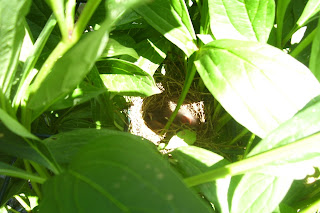
We discovered a little nest in one of the peony bushes a few weeks ago. Such an idyllic place to make a home! The scent is divine, lots of thick protection and dappled sunshine. It’s a chipping sparrow’s nest and she has two little babies tucked in there.
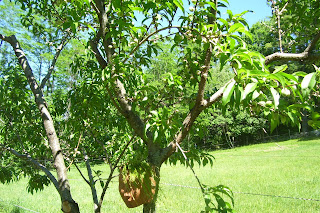
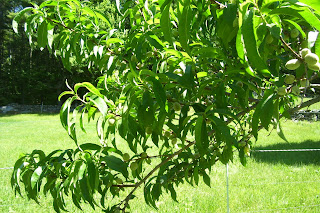
And the fruit trees are loaded with tiny fruits! Here is a branch of the peach tree which gave so many peaches last year we had to prop the branches up. Shall we begin a peach recipe swap?
Farming
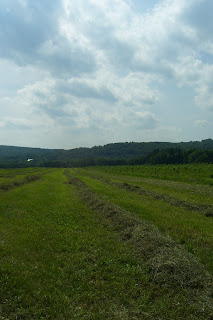
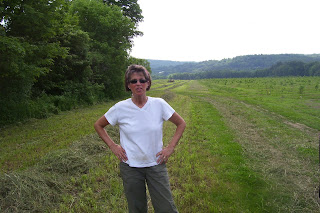

It’s hot, damn hot for June. And as soon as the word hot enters the forecast so does haying. You can’t bale hay if it’s raining and you can’t bale hay if it’s cold.
As I was loading bales onto the hay elevator at 4:30, the temperature on the ground in the sun at 90 plus degrees, and regularly looking up into the opening of the hayloft as the bales rode up the track where Jack was on the receiving end, with the hayloft temperature of 110 degrees, both of us sweaty and coated in hay chaff, I found myself wondering….would I have it any other way? And no, I wouldn’t. Jack wouldn’t either. Farming is healthy and connected to the earth. It’s pure and simple.
Natural Dyeing
I have been corresponding with a gentleman in England who found my article online about a dye recipe using green leaves (Barglar) and onion skins that I learned while working with Uzbekistan dyers a few years ago.
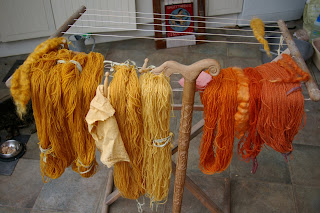
From the left are the results of the Barglar recipe on sheep’s wool, spun wool and cotton and then a 2nd and 3rd dyebath from the same recipe. In the center is a walking stick, hand-carved that the Englishman purchased in Khiva on a visit. Beautiful! To the right of the stick are skeins and sheep’s wool dyed with madder root.
You may read my entire article including the recipe a www.turkeyredjournal.com/ entitled “The Silk Threads of Khiva”. Search in the Archives section on the left sidebar. Vol 13, Issue 1.
New Hampshire
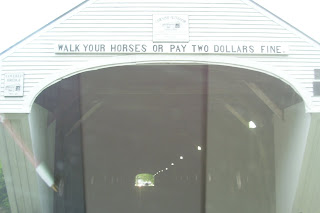
Jack and I took a trip North up the Connecticut River this week and found not only the longest wooden bridge in America but also the longest two span covered bridge in the world, less than an hour from home. Pictures don’t tell the whole story. Standing at the river’s edge and looking across the river from NH to VT conjured up a thousand images…and what stories this bridge could tell over the past century plus. If you travel the New England states, don’t pass this bridge by.


Uncategorized
We have started sending the flock out to greener pastures with a bit of a treat factor. They get the winter barn at day’s end to bring relief from the bug season.
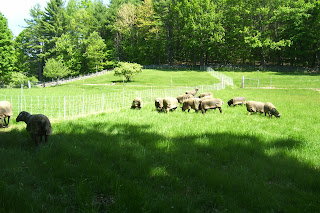
No matter how pretty the farm and how romantic the pictures, here in New England, on any farm and in any field, in the background are hundreds and hundreds of biting bugs from black flies to mosquitoes and later in the summer months, the “no-see-ems” (the littlest flies, so small you can’t see ’em, but they are insidious and most voracious at dusk and overnight).
I always feel for the wildlife such as the deer and moose during these months. The North Woods are especially fraught with biting bugs. Fortunately here on our farm the bugs are not as fierce because we are at a higher elevation with very little standing or running water around us.
I take a proactive position and every morning and night take the time to rub some organic bug repellent on their foreheads and ears. They love the smell and walk up and take their dose with pleasure!
Presently it is black fly season which will come to an end in another week so the sheep are day tripping to the pastures while the breezes blow and then back to the winter barn for the overnights until the spring bug season winds down. Call them spoiled, yes, but until you have endured a day without bug repellent, no matter what your species, the biting is maddening and exhausting!